
Metals, toxicology and organic analysis on blood, serum and tissue for research — with chain-of-custody documentation and direct access to the chemists doing the work.
Hospital research groups, academic labs and clinical investigators rely on IAS for the quantitative chemistry behind their studies — trace metals, toxicology and organic analysis on demanding biological matrices.
We measure what is in a sample down to trace levels, document the chain of custody when your protocol requires it, and talk through results with the researchers who need to interpret them.
Pilot-phase studies can start with a single sample and no account; ongoing studies get a streamlined submission workflow.
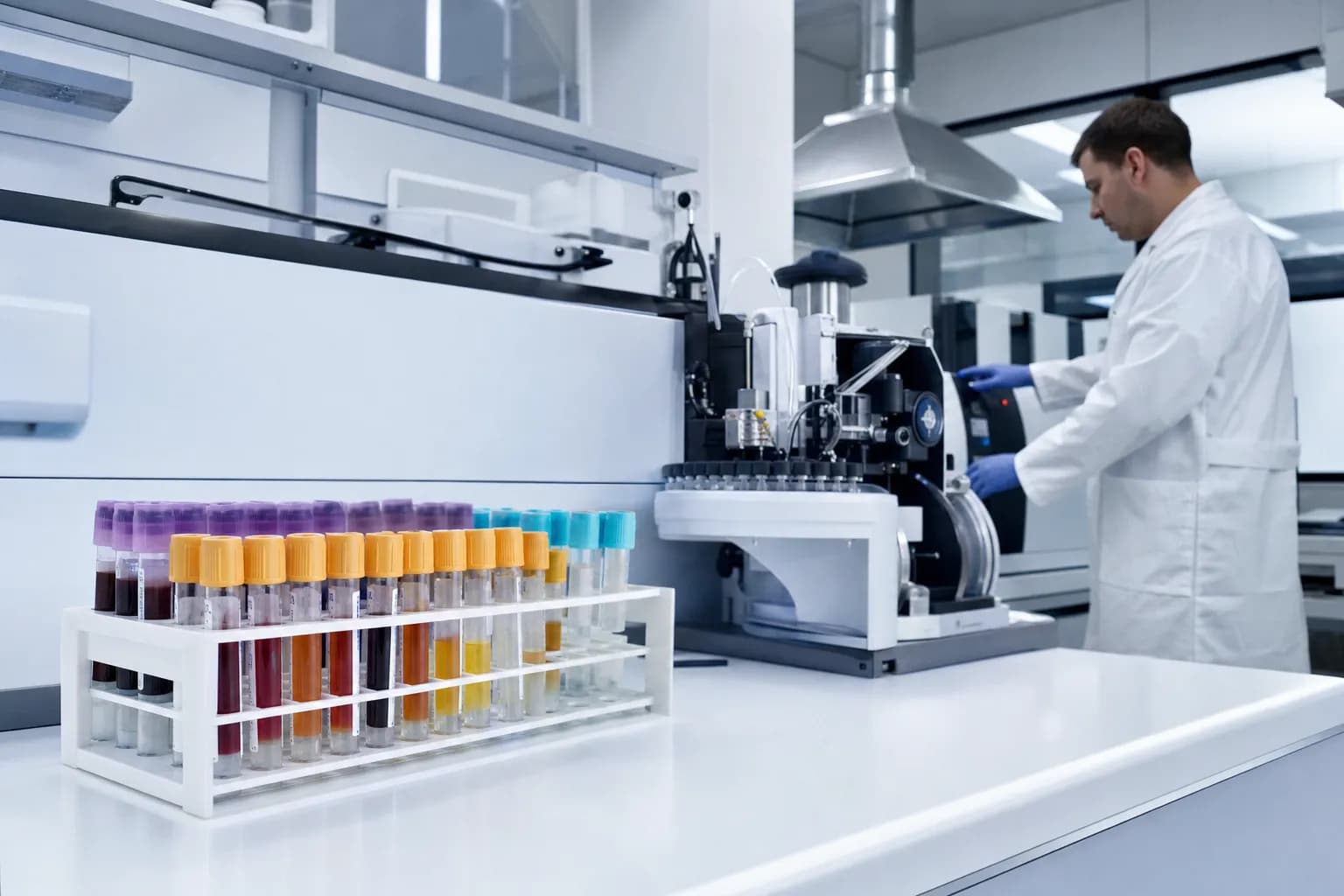
Trace metals, toxic elements and organic analytes at research-grade sensitivity.
Digestion and elemental or organic analysis of tissue specimens.
Urine, dialysate and study-specific matrices by arrangement.
| Test / Analysis | Typical method | From |
|---|---|---|
| Trace metals in blood / serum | ICP-MS | $190 |
| Heavy metal / toxic element panel | ICP-MS | $210 |
| Organic compound screen | GC-MS | $185 |
| Tissue elemental analysis | Digestion + ICP-MS | Call to quote |
Detects and quantifies trace and ultra-trace metals down to parts-per-trillion levels.
Identifies and quantifies volatile and semi-volatile organic compounds.
Identifies organic & inorganic compounds through molecular fingerprinting.
Yes. When your protocol or eventual publication requires it, we maintain documented chain-of-custody from receipt through reporting.
Yes — ICP-MS gives parts-per-trillion sensitivity for metals and toxic elements across blood, serum, tissue and other biological matrices.
Absolutely. Pilot-phase work can begin with one sample and no account, which is ideal before committing to a full study.
Yes. Most consultations are included — you can talk through method choice and results directly with the analyst.
Unusual matrix, a bespoke analyte list, or a method that has to be built around your protocol? Research is where flexible, custom analytical work is the norm for us — bring us the question.
Talk through your matrix and analyte list with a chemist before you submit your first sample.